Cracked Canopy, Steady Hands: A Rainy-Saturday Rescue Plan for Second-Hand Models
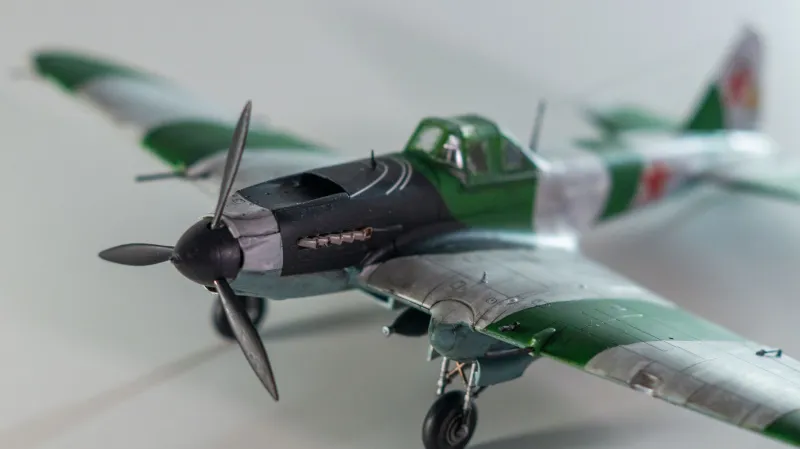
There's a particular shelf in most British charity shops — the one near the back, past the jigsaws, where somebody's late uncle's Spitfire sits in a shoebox with a fiver pencilled on the lid. Usually it's a write-off. Occasionally it's the best three pounds you'll spend all winter. The trick is telling those two things apart before you get it home, because the shop won't let you take the lid off and there's a volunteer hovering by the till.
This is a rainy-Saturday job, not a weekend job. Set your expectations at "improved", not "restored", and the whole thing becomes a lot more enjoyable.
The two-minute pavement inspection
Ask to see it properly. Most charity shops are fine with this, and if they aren't, that tells you something. Then run the same handful of checks every time.
- Glue squeeze-out. Look along the wing roots and fuselage seams. A tidy build with one stray blob is a candidate. A model wearing a crusty necklace of poly cement all the way round is a warning about how much care went into the rest of it.
- Silvered decals. Milky patches under the transfers mean they were slapped onto bare plastic. That's ugly, but it's superficial — you can sand back, gloss and re-decal. Frosted or crazed clear canopy parts are a worse sign, because that's cement vapour and it doesn't come off.
- Warping. Hold it up against a straight edge, or just sight down the fuselage. Heat-damaged or badly clamped builds have a banana shape that no amount of filler will fix.
- The rattle. Give it a gentle shake next to your ear. If something's loose inside, it's either a trapped part or a broken undercarriage leg rolling around. Not fatal, but worth knowing.
- Completeness. Missing propellers, wheels and pitot tubes are normal. Missing half a tailplane is not. Photograph it on your phone and check against a sprue shot online before you commit.
Set yourself a ceiling — three to six pounds for a built kit, less if it's missing bits. Above that, you're paying restoration money for somebody else's homework.
First, assume it won't come apart
Here's the bit that saves a lot of heartbreak: most built kits are welded with solvent cement, which melts the plastic together. Those joints are not coming undone. You can freeze the model for an hour and try to crack the seams, you can dribble a little isopropyl along them and apply very gentle pressure, but if it resists, stop. There's a fine line between persuasion and a snapped wing.
The realistic approach for most rescues is partial disassembly: get the removable stuff off — undercarriage, propellers, canopies fixed with white glue or clear parts cement, drop tanks,Figures on bases — and work with the rest as one lump. Pop the parts into a labelled tub straight away, because a 1/72 tailwheel has legs and will vanish.
For seams that genuinely need to go, a fresh scalpel blade drawn along the join, not across it, plus patience, does more than any chemical.
Stripping paint in a small flat
You do not need a vat of oven cleaner and a respirator. Work in stages and only strip what you must.
Acrylics come off happily with isopropyl alcohol on a cotton bud or a bit of kitchen roll. Work in the sink area, ventilate, wear nitrile gloves, and don't soak the whole model — IPA can dull clear parts and soften some older plastics if you leave it swimming.
Enamels are a longer game. Warm water with a drop of washing-up liquid and a soft toothbrush will lift brush marks and dust without touching the paint you want to keep. For stubborn patches, a wipe of IPA on a cloth, used sparingly, is usually enough. Avoid acetone and nail polish remover entirely unless you enjoy the smell of dissolved aeroplane.
A useful principle: strip the areas nobody looks at first — undersides, wheel wells, inside of doors — and leave sound original paint where it's doing its job. Repainting over a decent base is faster and safer than starting from grey.
Everything happens on a wipe-clean tray with the window open. No solvents near the kitchen table, no stripping while you're eating, and keep the tubs capped. It's boring advice and it's the advice that keeps you building.
Repairs with what's actually in the house
- Snapped gear legs and struts: drill both ends with a 0.5mm bit and pin with a section of paperclip, then superglue. Stronger than new.
- Gaps and craters: stretch a piece of sprue over a candle (outside, obviously) and use the thin strand as filler rod with a drop of solvent cement. Cheap, colour-matched, sandable.
- Missing seatbelts, aerials, gun barrels: drinks-can aluminium, guitar string, fuse wire, the plastic from a blister pack. Nobody at three feet can tell.
- Chipped paint on a repair: feather the edge with 1200 grit, brush a thin coat of the closest match, then blend with a light dusting of the same colour through the airbrush if the area's big enough.
- Silvered decals: score them lightly with a blade, flood with a decal softener, and once dry go over the edge with a matt varnish to knock back the shine.
Knowing when it's a paint mule, not a project
Sometimes you get it home and the truth lands: the seams are trenches, the canopy is opaque, the decals have yellowed, and the undercarriage has been rebuilt out of hope. That model isn't a failure. It's a test piece, and a good one.
A clapped-out build is the ideal surface for practising mottling, pre-shading, hairspray chipping or freehand camouflage, because there's zero pressure and no pristine kit to ruin. You can lay down a primer, try three different panel-line techniques across three wings, and throw it away without a twinge.
Honestly, that's a better use of four pounds than most practice boards you can buy.
The rainy-Saturday rule
Give the rescue one sitting. If it's going well, carry on. If it's fighting you, park the parts in a tub, promise it a proper look in the spring, and go and make a cup of tea. A second-hand model should be a low-stakes pleasure — a bit of sanding, a bit of pinning, a canopy that goes back on straight — not a hostage situation.
And if you spot a 1/48 Harrier in the back of an Oxfam on Saturday, leave it. That one's mine.