Counter Intelligence: Why a Saturday at the Model Shop Beats Another Browser Tab
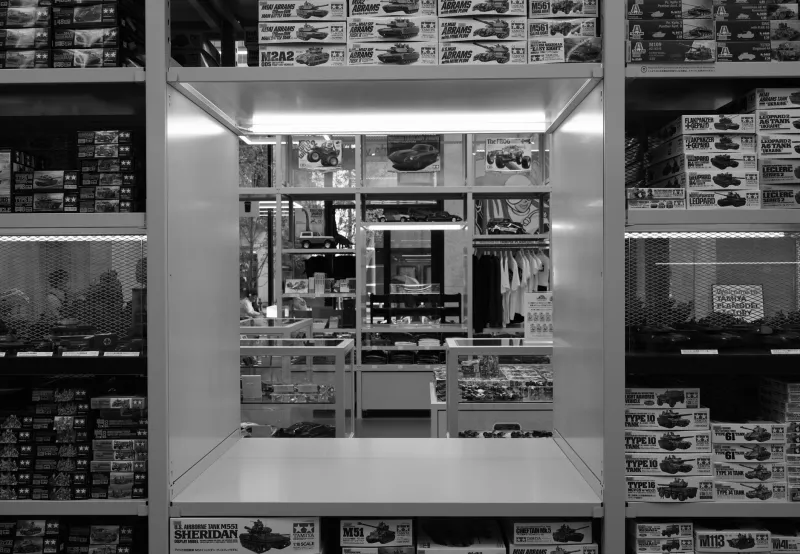
There is a particular sound to a proper model shop on a wet Saturday morning. Not the soft click of an online basket, but the squeak of a door, the rustle of a carrier bag and someone behind the counter saying, “Try it on a scrap first.” That sound is worth protecting. It is also worth planning for, because a good Saturday run around independent UK shops can solve problems that no product page ever will.
The trip is not a shopping list, it is a conversation
The mistake is treating a model shop like a vending machine. You arrive with a list, you buy the list, you leave. That works for bread. It is a poor way to buy hobby supplies. The real value of the counter is that the person behind it has probably seen your exact problem before — usually several times, often on a Tuesday, sometimes with the same kit you are holding.
So the first rule of a Saturday crawl is simple: leave room in the plan for being wrong. You might go in for a pot of dark grey and come out with a different dark grey, a brush you did not know you needed and a warning about the decals. That is not a failed trip. That is the point.
What the counter can do that a basket cannot
Colour matching under real light
Paint charts lie in gentle, well-meaning ways. Your screen lies more. A shop window on a grey November morning is not a perfect colour-matching booth, but it is a useful reality check. Take a painted figure, a colour chip or even the kit’s paint callout with you and hold the pot against it. Ask the shopkeeper what they would use as a base coat. You do not have to take the answer as gospel, but it gives you a second opinion that is actually standing in front of you.
This is especially useful when you are trying to match a colour across brands. A helpful shop will let you compare lids, swatches or a test card. A very helpful shop will tell you which of the two pots is more likely to fight your chosen varnish. That sort of thing rarely appears in a product description.
Nozzle advice you can act on
If you are buying airbrush consumables, the counter is where vague worries become practical answers. Take the brush with you if you can. Ask about nozzle sizes in plain terms: what suits priming, what suits fine detail, what is a waste of money for the kind of painting you actually do. A good shopkeeper will not upsell you into a nozzle you will never fit. They will ask what you are spraying, what compressor you have and whether you have already tried cleaning the thing properly.
That last question is important. Half of all airbrush purchases are really cleaning purchases in disguise. If the shop can save you from buying a new nozzle when you need a new cleaning routine, that is a win.
The clearance bin is a conversation starter
Clearance bins are dangerous in the best way. Old stock, odd colours, end-of-line kits and lonely pots with no label can be genuinely useful. They can also be a graveyard for someone else’s bad decision. The trick is to ask before you dig too deep. “Is this old stock or just unpopular?” is a fair question. So is “Has this been sitting in the window since the last time I had hair?”
Buy clearance paint only if you can test it or the price makes the risk sensible. Buy clearance kits if you actually want the subject, not just the discount. And always check the box. A faded box with a missing sprue is not a bargain; it is a future article about missing parts.
Noticeboards and the local pulse
Do not ignore the noticeboard by the door. It is the closest thing many towns have to a hobby news feed. You will find club nights, painting groups, bring-and-buy sales, model shows and the occasional advert for a second-hand compressor. If you are new to the area, or new to the hobby, this is often more valuable than anything on the shelves.
Ask the shopkeeper which clubs are still active. Some noticeboard adverts are older than the paint on the window. A quick “Is this one still going?” saves you a wasted evening in a church hall with three chairs and a kettle.
What still belongs in the online basket
None of this means the internet is the enemy. If you know exactly which aftermarket detail set you want, or you need a specific replacement part for a kit from the back of the cupboard, online ordering is often faster and better stocked. Large tools, bulky modelling materials and anything you need in a hurry can be sensible to order in.
The distinction is simple. Use the shop for judgement, comparison and conversation. Use the internet for precision and range. A Saturday trip is not a protest against the web; it is a way to spend your money where the advice is attached.
A short checklist for not being That Customer
Before you go, know your kit, your paint brand and your airbrush model if you are asking about nozzles. Bring a sample colour if you can. Keep your questions specific: “What primer works on this resin?” beats “What should I buy?” Be honest about your budget. If you are only browsing, say so. Shopkeepers are generally patient people, but they are not psychic, and a clear question gets a clearer answer.
If the shop is busy, wait your turn and let the person with the broken airbrush go first. If you take up twenty minutes of counter time, buy something — even a pot of paint or a pack of sanding sticks. That is not a rule of law; it is just decent behaviour.
The Saturday route
Plan two or three shops, not six. One for paints, one for kits, one for a browse if you are lucky enough to have that many nearby. Leave time for a cup of tea and a look at the noticeboard. Take a bag that can survive a boxed kit and a bottle of primer. And do not treat the day as a failure if you come home with less than you expected.
The best model shops do not just sell supplies. They keep the local hobby going. A Saturday spent at the counter is a small investment in that — and a much nicer way to spend an afternoon than another browser tab.