Short Sprue, Long Odds: A Workbench Guide to Missing Kit Parts
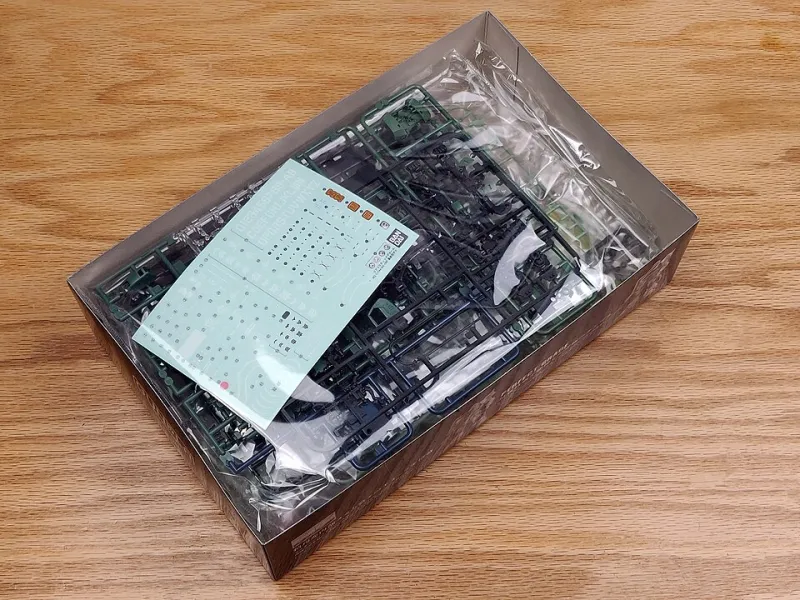
Photo: Gravis, CC BY-SA 4.0, via Wikimedia Commons
There is a particular silence that follows the third pass over a sprue. You have checked the bag, the box, the instructions and the floor. The part is not there. At that point the hobby stops being about modelling and becomes a small piece of admin. The good news is that a missing part is usually solvable, and the process is far less painful if you slow down before reaching for the glue.
The first ten minutes: audit before assembly
Do not start cutting parts free the moment a kit lands on the bench. Give it a kitchen-table audit first. Lay the sprues out, compare the letters and numbers against the instructions, and check the clear sprue separately. Clear parts are easy to miss because they hide in the bag. Decals and photo-etch sheets deserve the same treatment.
If something is missing or broken, photograph the whole layout before you tidy anything away. Put the box lid, the receipt or order confirmation, the sprue label and the relevant instruction page in one frame. Then take a close-up of the empty space on the runner, with a ruler or a coin for scale. Note the kit number, the batch code from the box or sprue, and the part number. Keep the packaging and the bags. Retailers and importers ask for these details because they help them trace a production run, not because they are trying to catch you out.
The email that actually gets results
A good missing-part email is short, factual and easy to action. Put the kit number and your order number in the subject line. State what is missing, where it should have been, and what you would like: a replacement part, a replacement sprue, or a replacement kit. Attach the photographs rather than linking to a cloud folder that may expire.
In the UK, your first port of call is normally the retailer, not the manufacturer. Under the Consumer Rights Act 2015, goods must be as described, of satisfactory quality and fit for purpose. If a kit arrives incomplete, the retailer is the party responsible for sorting it out. Within the first 30 days there is a short-term right to reject the goods and get a refund. After that, you can ask for a repair or replacement, and if neither is possible or timely, a price reduction or final refund. Online orders also sit alongside the 14-day cancellation rules under the Consumer Contracts Regulations 2013, though a missing part is usually better handled as a fault than as a change of mind.
You do not need to write like a solicitor. You need to write like someone who has kept the paperwork and expects a sensible answer. Keep the tone polite. Threats tend to slow things down.
Case study: the tail wheel that never shipped
Take a kit that landed on the bench in October 2026: a 1/48 Hawker Hurricane bought from a UK online retailer. The cockpit went together beautifully, then the instructions called for the tail wheel assembly. Part B12 was simply not on the runner. The builder had already started the kit, so a straight return felt wasteful.
The first email went to the retailer with photographs of the empty runner, the box code and the order number. The retailer offered two options: return the whole kit for a refund, or wait for a replacement sprue from the next delivery, expected in three to four weeks. The builder asked for the sprue and kept building around the missing part.
In parallel, a polite request went to the UK importer named on the box. That is not a demand; it is a query. The importer found a tail wheel in their spares and posted it out within twelve days. The part arrived before the retailer's sprue. The builder told the retailer, cancelled the sprue request, and got on with the build. Total delay: under two weeks, most of which was spent painting the cockpit anyway. The lesson is not that one route always wins. It is that a calm, documented request to the right people often beats an angry post on social media.
Who to ask, and in what order
Start with the retailer. They have your order record and the legal responsibility. If they cannot help quickly, ask who the UK importer or distributor is; the name is often on the box. Some manufacturers run their own spares portals or web forms, especially for recent kits. Older or second-hand kits are a different matter. At a car boot or swap meet you may have no receipt, so a manufacturer may help as a goodwill gesture, but you cannot rely on consumer rights in the same way.
If you do get two replacements, say so. Offering to return the spare costs you one email and keeps the spares chain healthy for everyone else.
When no replacement is coming
Sometimes the kit is long out of production, the importer has changed, or the part simply cannot be found. This is where the spares box earns its keep. A tail wheel can be built from a length of sprue, a piece of brass tube and a scrap of plasticard. Small levers and actuators often come from stretched sprue or fine styrene rod. Exhausts can be rolled from brass tube. A lost clear lens can be plunge-moulded over a balsa buck or formed from a scrap of clear packaging, though keep heat away from your fingers and work in a ventilated spot.
For flat panels, plasticard plus a rivet tool will get you close. For decals, aftermarket sheets or a scan-and-print fallback may be the only option; neither is perfect, but a slightly wrong marking is often better than a blank wing. If you have access to a local makerspace or a library with a 3D printer, a simple replacement can be drawn and printed. Measure twice, file once, and remember that paint hides colour differences far better than it hides bad geometry.
Prevention, not paranoia
None of this means you should open every kit in a state of suspicion. It means keeping the runners until the build is finished, storing small parts in labelled bags, and checking the box before you start rather than after the fuselage is closed. A missing part is not a moral failing or a sign that the hobby has it in for you. It is a logistics problem with a paper trail, and most of the time the trail leads to a replacement.
Keep the receipt, take the photographs, ask the retailer first, and keep a little styrene on standby. That is the whole protocol.