Small Brass, Big Panic: A Calm Search Plan for Airbrush Bits in Rented Rooms

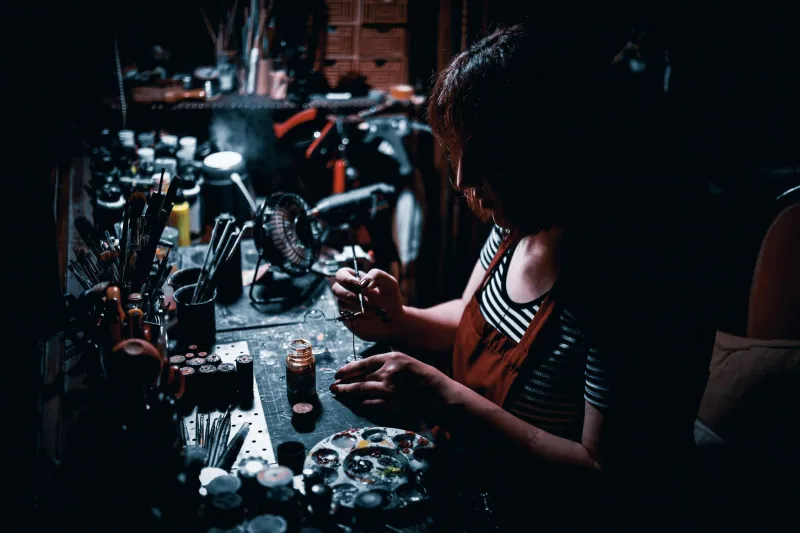
Photo: tiny brass airbrush nozzle and parts on a workbench tray macro, via m.media-amazon.com
There is a particular sound an airbrush nozzle makes when it leaves the bench. It is not a crash or a clatter. It is a tiny, bright tink, followed by the horrible silence of something very small deciding to become invisible. In a rented flat, that silence has an extra edge. You are not just looking for a brass part; you are looking at the floorboards and wondering how much of your deposit is currently hiding under the sofa.
The good news is that most of these disappearances are recoverable. The better news is that you do not need to take anything apart, lift a carpet or explain a hole in the wall to a letting agent. What you need is a level head, a cheap search kit, and a willingness to stop before the hunt becomes more expensive than the part.
First, freeze the scene
Do not start moving furniture in a wide, hopeful arc. Tiny parts travel less than you think, but they travel further when you sweep an arm through the area. Stand still for a second and mark the spot where the part was last seen. Put a tea towel or a sheet of kitchen roll over the immediate drop zone so nothing rolls further while you fetch a torch.
Use your phone torch held low and almost parallel to the floor. This is the trick that makes small brass and steel parts cast long shadows. A torch pointing straight down just lights the carpet; a torch skimming the surface gives you a chance of catching a glint. Work in slow strips, not random circles. If the floor is carpet, run your hand gently across the pile before you vacuum anything. A needle cap can sit surprisingly high in the fibres.
The five-quid search kit
You do not need a specialist recovery kit. A small drawer of household bits will do:
- A bright torch or your phone light.
- A telescopic magnet, the kind sold in pound shops and hardware aisles for retrieving screws.
- A pair of old tights, or a single knee-high, plus a rubber band.
- A clean sandwich bag or small tub.
- A piece of card and a soft brush.
- A vacuum with a crevice tool, used carefully and only with the tights stretched over the nozzle.
The tights-over-vacuum trick is the one worth practising before you need it. Stretch the fabric over the end of the crevice tool and secure it with the rubber band. The suction will still pull up dust and fluff, but a nozzle or needle cap should stop against the fabric instead of vanishing into the bag. Keep the vacuum on the lowest setting you have and do not press the tool hard into carpet. You are coaxing, not excavating.
Carpet, boards and sofa creases
On carpet, start with the torch sweep, then use the magnet in slow parallel lines. Brass is not magnetic, which is the annoying part. A magnet will grab steel needle springs and some caps, but it will ignore a brass nozzle. For brass, light and patience are your main tools. If the carpet has a deep pile, brush the area gently with the soft brush and watch for a small glint in the disturbed fibres.
On bare floorboards, resist the urge to prise anything up. A part may have dropped into a gap between boards, but unless it is sitting visibly at the edge, removing boards is a rental problem, not a hobby solution. Try a torch at a low angle along the gap and a magnet sweep if the part is steel. If it has gone truly underneath, write it off and order a spare. A replacement nozzle is cheaper than a conversation with a landlord about damaged flooring.
Sofas are their own ecosystem. Run your hand along the crease between seat and back, then use the card wrapped in a bit of tights to sweep the gap. A torch down the side of the cushion will often show a small brass dot sitting on the frame. Do not use the vacuum inside the sofa unless you can see the part and can cover the nozzle. Otherwise you are just posting it deeper into the upholstery.
Know when to stop
Give yourself a time limit. Twenty minutes of calm searching is usually enough. After that, the cost of your evening starts to outweigh the cost of a new nozzle. Check the airbrush manual or the parts diagram, note the exact part number, and order a spare. If you are mid-project, this is annoying but manageable. If you are new to the airbrush, it is a useful reminder that tiny consumables are part of the budget, like blades or masking tape.
Before you order, check the obvious places one last time: the bottom of the cleaning jar, the lip of the sink, the fold of your shirt, the inside of the airbrush case. A surprising number of nozzles are found in the same room, just not on the floor.
Build a tray that catches the next one
Prevention is mostly about giving small parts somewhere to land. A shallow bench tray with a raised lip is worth its weight in brass. Line it with a silicone mat or a sheet of non-slip drawer liner so parts do not skitter. Keep a small magnetic dish for steel bits and a little lidded pot for nozzles and caps. When you strip the airbrush, do it over the tray, not over the carpet. If you need to put a part down, put it in the pot, not on the edge of the desk.
A cheap washing-up bowl can do the same job if you are working on a kitchen table. The point is not to buy more gear; it is to create a boundary. Tiny parts behave much better when they have a wall to bounce off.
The floorboard nozzle mystery is rarely a mystery for long. It is usually a small part, a soft landing and a moment of panic. Search calmly, use the tights, know when to order a spare, and give the next nozzle a tray to fall into. Your deposit, and your weekend, will thank you.