Compressor on Strike: Four Weeks of Brush-Only Painting on a Small UK Bench

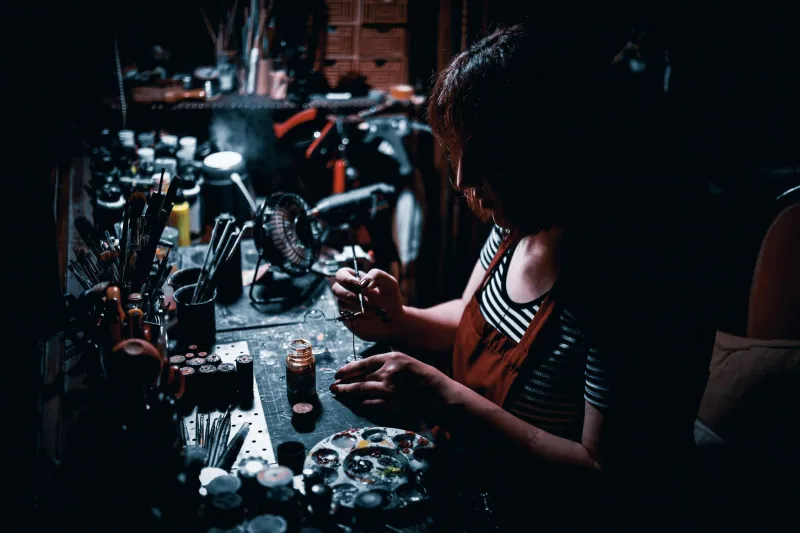
Photo: model kit brush painting on UK kitchen table with paints brushes and miniature tank, via img.freepik.com
At the start of October 2026, I did something that felt slightly disloyal: I unplugged the compressor, coiled the hose, and put the airbrush in its case. For four weeks I painted a single 1/35 Sherman using only brushes, sponges and washes. No trigger, no nozzle-cleaning ritual, no neighbour wondering why a hairdryer was running in the spare room. The point was not to prove that one method is better. It was to find out what actually happens to finish, speed and enjoyment when the default tool is taken away.
The rules of the experiment
The kit was a 1/35 Sherman with a reasonable amount of flat armour, a turret, stowage and tracks. I allowed a rattle-can primer on a dry, mild day because brush-on primer on large parts is its own special kind of penance. Everything after that had to come from a brush, a sponge or a wash.
My paint box was deliberately budget-friendly: Vallejo Model Color, AK 3rd Gen, Army Painter Warpaints, and a couple of elderly Humbrol enamels for small details. Brushes were a Rosemary & Co size 2 and 0, a cheap flat 6 from a craft shop, plus supermarket washing-up sponges and a pack of makeup sponges. Sessions were mostly 30 to 45 minutes on weeknights, with a longer stint at the weekend.
Week one: the basecoat reality check
The first surprise was how much time the basecoat swallowed. With an airbrush, a single-colour armour basecoat is a coffee-and-a-podcast job. With a brush, it was three evenings of thin coats, waiting for acrylic to stop feeling tacky, and resisting the urge to slap it on thick. The finish was fine — even and slightly textured — but it was not the smooth, factory-flat surface an airbrush gives you.
On large flat panels, the sponge became the hero. Stippling thinned paint with a torn makeup sponge built colour much faster than a brush and left a subtle mottle that suits armour. On the turret and small fittings, the brush was quicker and more controlled. By the end of week one I had a basecoat, a sore wrist and a new respect for anyone who paints 1/35 vehicles entirely by brush.
Week two: camouflage without overspray
Soft-edged camouflage is where the airbrush normally earns its keep, so this was the honest test. I used a sponge for the green-brown mottle and a brush for tighter areas. The result was not a perfect feathered edge, but it was close enough for a game-ready model, and it had a handmade texture that I liked more than I expected.
Hard-edged schemes were easier: masking tape, a brush, and careful burnishing. No overspray meant I could paint at the kitchen table without draping the room in bin bags. That matters in a UK flat or a terraced house where the compressor lives under the spare bed. The lack of setup and cleanup was a genuine pleasure. I could do fifteen minutes before dinner and not spend ten of those minutes fiddling with pressure settings.
Week three: detail, washes and the quiet bench
Detail painting was the clear win. Brush-only work forced me to slow down, and small parts like tools, stowage straps and periscopes came out sharper than they often do when I am rushing an airbrush session before the light goes. Cleanup was one jar of water and a brush soap, not a strip-down and a nozzle soak.
I also leaned on washes more than usual. A thinned brown acrylic wash and a little drybrushing gave the armour depth without needing a full weathering session. The model started to look like a finished object rather than a basecoat waiting for the next stage. That psychological boost is underrated. When your bench time is short, seeing progress quickly keeps the project alive.
Week four: the final comparison
By the end of the month I had a completed Sherman, a tidy bench and a clearer view of the trade-offs. The airbrush still wins on speed for large areas, smooth basecoats and soft camouflage. It also wins on consistency when you need repeatable colour across several models. But brush-only painting won on setup time, noise, smell, space and the simple fact that I could paint in the same room as the rest of the household without apologising.
Finish-wise, the brush model had more visible texture and slightly less uniformity. That is not automatically a fault. On armour, it reads as wear and surface variation. On a glossy car or a clean aircraft, the same texture would be a problem. Speed-wise, the brush was slower overall, but the gap narrowed on small sessions because there was no airbrush prep or cleanup. Enjoyment-wise, I missed the airbrush for big smooth coats and did not miss it at all for detail work.
The verdict is not that one method replaces the other. It is that the airbrush should not be the automatic first reach for every task. A brush-only month reset my habits. I now basecoat large areas with the airbrush when it is practical, then switch to brushes and sponges for texture, details and short evening sessions. That hybrid rhythm suits a small UK bench better than any purist approach.
If you fancy trying it
Start with a single kit and lower your expectations for the basecoat. Thin your paints more than you think, use a wet palette if you have one, and test the sponge on scrap plastic before touching the model. Keep a hairdryer on cool for stubborn drying days, and do not attempt a glossy finish without accepting that brush marks will show. Budget paints are perfectly capable here; technique matters more than the label on the bottle.
Most importantly, treat it as an experiment rather than a judgement. Leaving the airbrush off for a month did not make me a better painter overnight. It did make me more deliberate about when to use it — and that is worth more than another gadget on the bench.