Postcode in a Pipette: How UK Tap Water Changes Your Acrylic Airbrush Mix
British tap water is not one ingredient. It is a postcode-sized variable. A kettle in Glasgow and a kettle in Hampshire can build entirely different limescale performances, and the same difference shows up in your airbrush cup if you thin acrylics with whatever comes out of the tap.
That is not a reason to panic-buy laboratory water. Most acrylics are forgiving, and plenty of excellent models are painted with tap water every week. But if you chase fine detail, thin your paint heavily, or have just moved from a soft-water area to a hard one, water is one more variable worth knowing about.
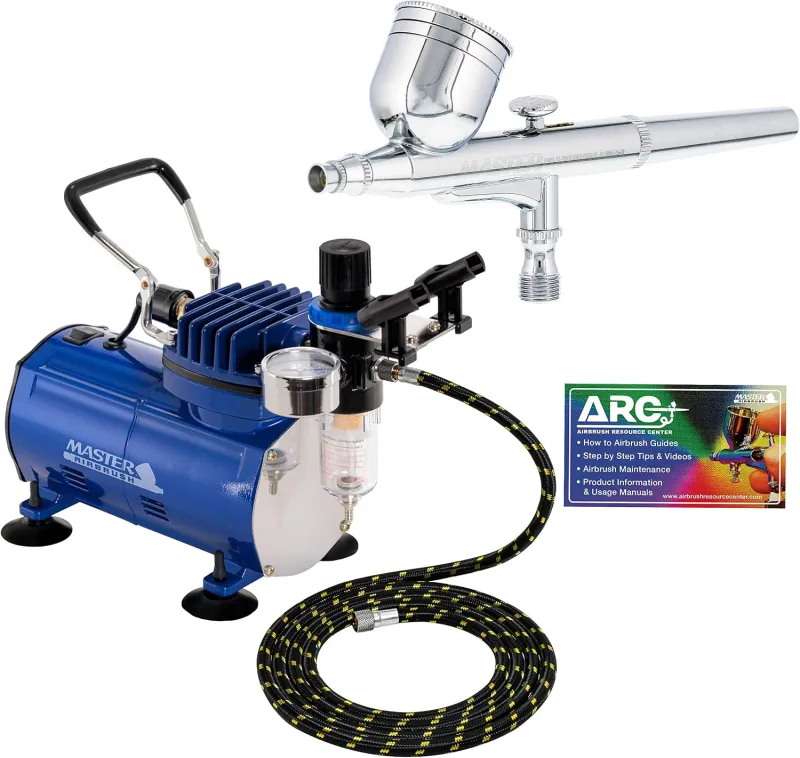
We set up a deliberately simple bench test. Same acrylic paint, same 0.3 mm needle and nozzle, same pressure, same semi-gloss card. The only change was the water: a soft Scottish-style sample, a mixed Midlands-style sample, a hard southern sample, distilled water as a control, water from a supermarket filter jug, and a ready-mixed acrylic thinner. This was not a laboratory study — just a hobbyist check with a notebook and a scrap card.
The bench test: one paint, several waters
The aim was not to crown a winner. It was to see whether the differences were noticeable enough to matter at the bench. Each mix was made at roughly 1 part paint to 1 part liquid for general coverage, then at a thinner 1:2 mix for fine lines. We sprayed a stripe, a dot pattern and a few tight curves, then left the brush sitting for five minutes before testing tip dry.
The soft sample mixed easily and felt familiar. The hard sample was slower to incorporate, with a faint cloudy edge in the cup if we rushed it. The filtered jug sat somewhere in the middle. Distilled water behaved like a neutral baseline. Ready-mixed thinner was the most consistent for fine work, but it is also the most expensive per cup.
What the water did
In the soft-water mixes, paint flow stayed steady and tip dry was mild. The hard-water mixes were not disastrous, but they were fussier. Tip dry arrived earlier, especially on the finer mix, and the spray occasionally felt like it was hesitating at the start of a pass. On the semi-gloss card, an over-thinned hard-water mix dried with a faint chalky haze in one patch. It was subtle, but it was there.
The filter jug reduced the worst of that behaviour. It did not turn hard water into distilled water, and the filter needs changing on schedule, but for general coverage it was a reasonable halfway house. Distilled water gave the cleanest, most predictable mix. Ready-mixed thinner gave the longest working window and the best fine-line behaviour, which is exactly what you pay for.
One important note: boiling water does not soften it. It concentrates the minerals left behind. If your kettle has a fur coat, do not assume the boiled version is better for paint.
Three cheap fixes, ranked by faff
Distilled or deionised water is the simplest control. It is widely available from car accessory shops, pharmacies and larger supermarkets, and a bottle lasts ages when you are only adding a splash to a paint cup. Use it for thinning and keep tap water for cleaning. This is the lowest-faff option if your supply is hard.
A filter jug is the middle path. It takes the edge off hard water and is useful if you already have one in the kitchen. Do not treat it as a permanent fix: filters expire, and the water is still not distilled. It is best for broad coverage and priming mixes rather than precise detail work.
Ready-mixed thinner is the consistent option. It costs more, but it removes the water question entirely and usually brings flow improvers or retarders with it. For figure eyes, fine camouflage edges and long sessions, it earns its shelf space.
A regional starting point
Think of this as a first guess, not a rule. Very soft supplies — much of Scotland, Wales and parts of the south-west — are usually fine for general acrylic thinning. Start with tap water for coverage, then switch to distilled or thinner for fine detail if you see tip dry or spitting.
Mixed or moderately hard supplies — much of the Midlands and the north — often sit in the middle. Try a 50/50 mix of tap and distilled water for general work, or use the filter jug. If the paint starts to feel grippy at the nozzle, move towards distilled for detail.
Hard and very hard supplies — much of the south-east, London and chalk-stream country — are where water control pays off most. Use distilled or ready-mixed thinner for paint, and keep tap water for cleaning. If you want to use tap water, filter it first and test it on scrap before committing to a full model.
A five-minute test before you commit
Before you blame the paint, the needle or the phase of the moon, run a quick water test. Mix a small batch with your usual water, spray a line on scrap card, let the brush rest for five minutes, then spray again. If it hesitates, spits or leaves a gritty edge, change one thing: switch to distilled water or add a drop of flow improver. Keep a note of what worked.
Your water supplier publishes a water quality report, and it is worth a look if you are curious about hardness. But the bench is the real judge. Tap water is brilliant for cleaning and perfectly usable for plenty of broad work. For the delicate stuff, give it a little respect — and keep a bottle of distilled water under the bench.