Twelve Short Evenings, Twelve Small Wins: A Festive Bench Calendar
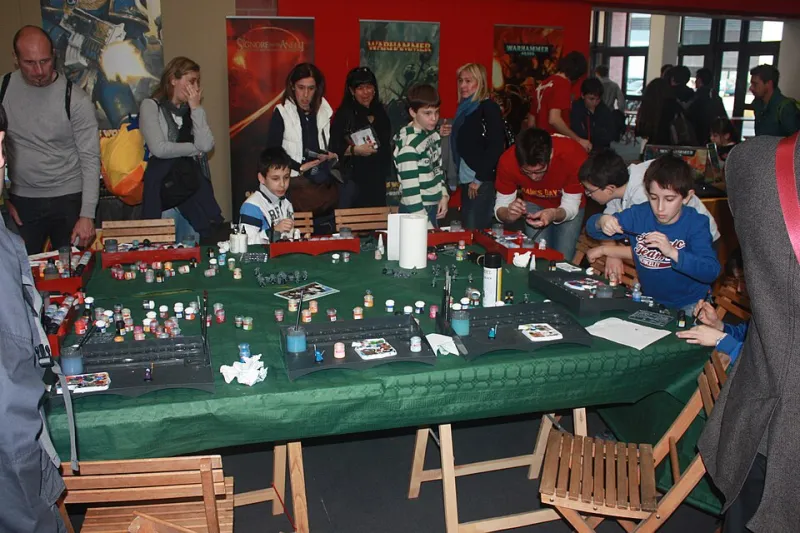
Photo: Moroboshi, CC BY-SA 3.0, via Wikimedia Commons
By 8 November 2026, the summer plan of building a whole army and painting every model in the stash has usually collapsed into a pile of stalled sprues. That is fine. The evenings are dark, the bench is cold, and good intentions are not a hobby strategy. This advent-style calendar is the opposite of a big project. It is twelve tiny jobs, each one short enough to fit between dinner and bed, and each one designed to leave you with something finished rather than another half-started kit.
How the calendar works
Think of it as twelve drawers. Open one, do the job, close the drawer. Use a timer if you like, but do not turn it into a deadline. The rules are simple: one small project at a time, use scraps where you can, and stop when the timer goes or when the job is done. A finished base is better than a perfect unbuilt tank. If you miss a day, skip it. The calendar is a prompt, not a second job. Keep knives and airbrushes away from children and pets, and ventilate if you are spraying.
Days 1 to 4: warm-ups for dark evenings
Day 1: The stalled figure rescue, 15 minutes
Pick one figure from a box you have been ignoring. Clean a mould line, glue it to a base and give it a single wash or a base coat. You are not painting a masterpiece. You are moving one figure from the pile to the shelf. Materials: one figure, glue, a brush and a wash. Win: something off the sprue.
Day 2: Paint swatch spoons, 20 minutes
Plastic spoons are cheap, useful and easy to label. Prime two or three, then test a colour mix or an airbrush thinning ratio. Write the recipe on masking tape and keep the spoons in a box. Next time you are unsure about a green, you have a reference. Materials: spoons, primer, paint, tape. Win: a colour notebook you can hold.
Day 3: Tuft and scatter sampler, 25 minutes
Cut four small squares of card or MDF. Cover each with PVA, then add a different scatter mix, a tuft or a bit of gravel. Label them. These are not finished terrain pieces, they are a palette for future bases, and they use up the little bags of flock that never quite get finished. Materials: card, PVA, scatter, tufts. Win: four reference bases and a tidier scrap box.
Day 4: Sprue barricade, 30 minutes
Do not bin every frame. Cut straight sections of sprue, sand the ends, glue them into a small barricade or a stack of crates, then prime and paint. It is tabletop scatter from rubbish, and it is genuinely useful for covering a gap on a board. Materials: sprue, clippers, sanding stick, glue, primer. Win: one piece of tabletop clutter for free.
Days 5 to 8: use the scraps
Day 5: Cork rubble objective marker, 25 minutes
Break a cork coaster into chunks, glue them to a 40mm base, add a little gravel and drybrush grey over brown. A chopped-up cork is one of the most reliable rubble piles in the hobby. Keep the dust for later scatter. Materials: cork, base, PVA, gravel, paint. Win: an objective marker that looks deliberate.
Day 6: One-colour airbrush drill, 20 minutes
Load the airbrush with a single colour and practise on a spare piece of plastic card. Work on trigger control, thin passes and stopping before the paint pools. Then clean the brush properly. This is not a model. It is practice, and practice is a finished job too. Materials: airbrush, paint, card, cleaning jar. Win: a smoother trigger and a clean nozzle.
Day 7: Weather a crate, 30 minutes
Take a crate, box or barricade from the terrain pile. Sponge on a little dark brown, add a light drybrush, then seal it. Do not weather every surface. Pick one edge and one corner. Materials: crate, sponge, paint, varnish. Win: a tabletop piece that reads as used rather than new.
Day 8: Mini paint tray from a box lid, 20 minutes
Cut slots in a shallow cardboard box lid and tape the edges. It is a tray for the paints you are using this week, not a permanent furniture project. When the week ends, tip it back into the main storage. Materials: box lid, knife, tape. Win: fewer bottles rolling across the desk.
Days 9 to 12: small finished pieces
Day 9: Festive objective marker, 35 minutes
Make a tiny seasonal objective: a gift crate, a snow-capped well or a pudding-shaped marker on a base. Use beads, cork, foam offcuts and snow flock. Keep it small and silly. Materials: base, scraps, PVA, snow flock, paint. Win: a piece of festive terrain that will actually get used.
Day 10: One stalled kit part, 30 minutes
Choose one part of a stalled kit, such as a cockpit, a wheel or a gun shield. Clean it, paint it and set it aside in a labelled bag. You are not finishing the kit. You are breaking the logjam. Materials: one part, paint, bag, label. Win: the next session has a head start.
Day 11: Packaging terrain tile, 40 minutes
Foam packaging, card and texture paste can become a small terrain tile. Cut a rough shape, glue it down, add texture and paint it with two or three colours. Do not aim for a full board. Aim for one tile that fits beside your existing scenery. Materials: foam, card, texture paste, paint. Win: a new bit of tabletop ground from the recycling bin.
Day 12: Bench reset and display shelf, 30 minutes
Clear the mat, put the tools back, bin the offcuts and place the finished pieces from the last eleven days on a shelf or tray. Write a short list of what you want to do in January. Materials: a cloth, a bin bag and five minutes of honesty. Win: a bench that is ready for the next project instead of buried under the last one.
Keep it low-pressure
The point of this calendar is not to finish twelve perfect projects. It is to prove that short sessions still count. If a day goes wrong, swap it for another. If you only manage four, you still have four more finished things than you had at the start of the month. Mince pie optional, but recommended.